
 OMG Nepal
For many families, Dashain means journeys home, visits to elders and meals that bring relatives together. An invitation lets a visitor share in that family time. You do not need to arrive knowing every ritual; a little consideration helps much more than trying to perform expertise.
Here are eight ways to make the visit comfortable for your hosts and for yourself.
1. Confirm the visit before setting out
Ask when to arrive and whether the family has other visits planned. Dashain can involve several households in one day, so a specific arrangement is easier to work around than an open-ended promise to drop by.
2. Understand the invitation to receive tika
Tika and jamara are familiar parts of elders’ blessings during Dashain. NTB describes tika made with rice, yoghurt and vermilion, accompanied by barley shoots. If you are invited to take part, let the family explain where to sit and what to do. Practices vary between households.
3. Bring something your host will welcome
Ask whether fruit, a small food contribution or another modest gift would be useful. There is no need to turn the invitation into an expensive exchange. If you bring food, choose something that suits the household’s preferences.
4. Explain dietary needs early
Let the host know about ingredients you cannot eat before the meal is prepared. Some Dashain tables include meat; others follow different preferences. A clear, early explanation gives the kitchen options and avoids an awkward surprise at the table.
5. Ask before making family photographs public
The colour of tika and jamara can make a memorable photograph, but a family gathering is still private time. Ask before taking pictures and again before posting them online. Give particular care to photographs of children or older relatives who may not expect a public audience.
6. Enjoy the activities at their own pace
Kite flying and bamboo swings are among the festival traditions described by NTB. If you are invited to join, follow the people organising the activity rather than taking it over for a video. Watching and talking can be just as much a part of the occasion.
7. Leave room for different ways of celebrating
No single household represents every Nepali tradition. The food, rituals and meaning of the visit may differ from what you have read. Ask what a practice means to your hosts instead of comparing it against a fixed online script.
8. Arrange your journey home
Thank the family, offer help where appropriate and leave without making an unplanned transport problem their responsibility. Confirm your return arrangements earlier in the day, particularly if you are relying on a booked service.
For exact 2026 dates and ritual times, use a current calendar and your hosts’ guidance. The enduring part of being a good guest is simpler: arrive when expected, listen with interest and appreciate the time a family has made for you.
From the OMG Nepal archive
The Art of the Ring: Why Sel Roti Is a Nepali Celebration in Itself
Sources and further reading
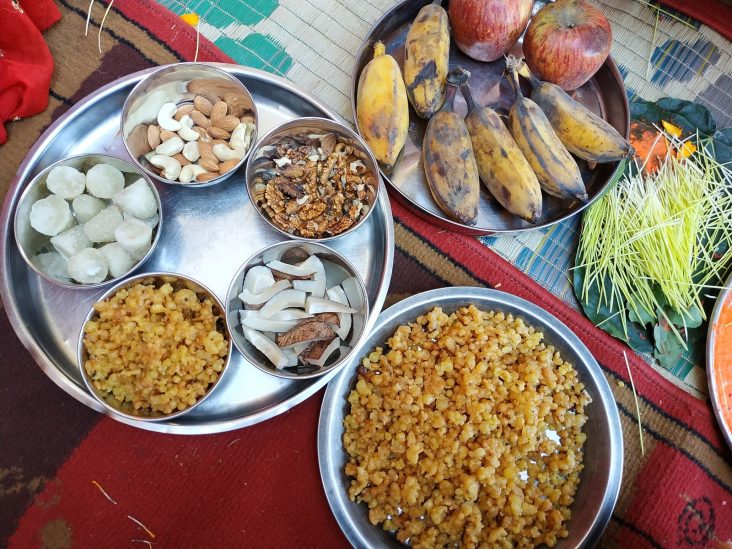
Featured photo: Food and jamara arranged for Dashain. Photo: Nirajan_pant / Wikimedia Commons · CC BY-SA 3.0. Resized for web.