
 OMG Nepal
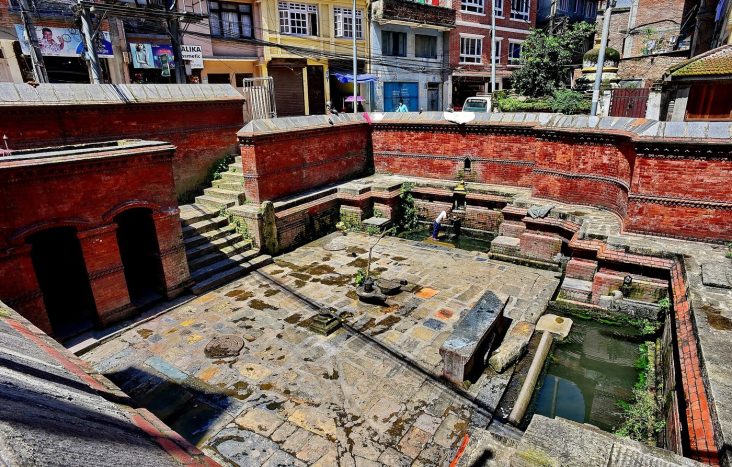
Maru Hiti in Kathmandu in 2021. This is a different site from the Yenga Hiti restoration discussed below.
A stone spout can look like a finished piece of heritage. A working water system is never quite finished: channels need attention, sources need understanding and people have to care for it. Kathmandu Valley’s hiti invite us to look at heritage as a continuing relationship between a place and its users.
Begin at Maru Hiti
The Nepal Heritage Documentation Project identifies Maru Hiti beside Kathmandu’s Kasthamandap area as a significant stone-spout site with a history of worship and social interaction. Its curated account describes the site’s five spouts and the care provided by a local youth organisation.
That description is a record of the site, not a live report on which spouts are flowing today. For a visitor, it offers a useful question to take along: what work keeps a public place usable after the original builders are gone?
Restoration reaches beyond the stone
A UNESCO-published case study by a World Monuments Fund specialist describes the restoration of Yenga Hiti. It reports a return to operation in 2025 and explains how hydrological study, water-channel repairs and community participation informed the work.
Maru and Yenga are different sites. Together, the documentation and restoration account show why saving a spout’s carved surface is only one part of understanding it. The water’s route and the arrangements for care are part of the heritage too.
Notice use as well as appearance
When visiting a hiti, leave space for people using the site and ask before photographing them closely. Look for the relationship between the spouts, steps and surrounding public area, rather than only the most decorative detail.
Do not assume that visibly flowing water has been tested as safe to drink. A heritage description is not a current water-quality assessment.
The most interesting question is not simply how old a stone fountain is. It is how a community can keep knowledge, maintenance and access connected over time. A hiti makes that question visible, one channel and one act of care at a time.
From the OMG Nepal archive: How Did They Make That? Patan Museum’s Fascinating Metalwork Story.
Sources and further reading
Sources checked October 26, 2026. Historical dates are stated in the story; announced event details may change.
Cover photo: Maru Hiti Dhunge Dhara Hanumandhoka Kathmandu Nepal Rajesh Dhungana.jpg by Rajesh Dhungana / Wikimedia Commons. CC BY-SA 4.0. Resized and converted to JPEG for web; theme thumbnails may crop.