

 OMG Nepal
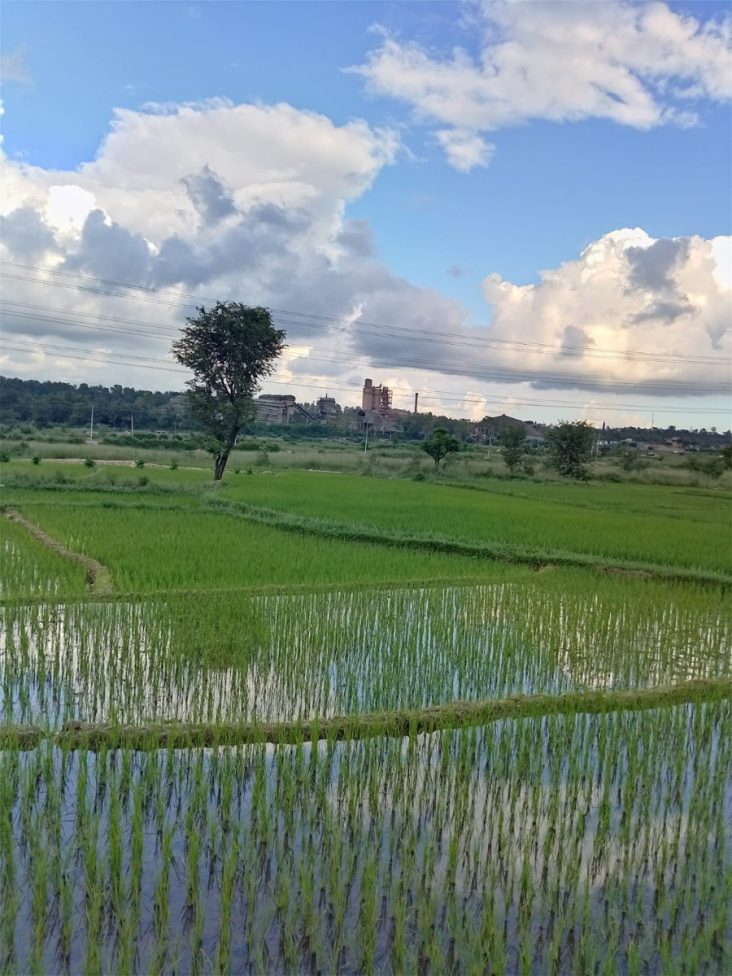
Hetauda Cement Factory beyond a paddy field. Contextual industrial photograph; no participation in the 2026 project is asserted.
A factory’s boiler rarely makes the promotional photograph. It works behind the product, supplying heat or steam while attention goes to what comes out at the other end. In Nepal’s energy conversation, that overlooked machine is becoming a subject worth understanding.
Why heat deserves a place in the story
ICIMOD’s notice for a June 24, 2026 consultation describes Nepal’s reliance on fossil-fuel boilers across industrial activities, including food and beverage production and textiles. The meeting was designed to examine cleaner technologies and what would make them suitable for different industrial settings.
Its questions were concrete: grid reliability, transformer capacity, matching equipment to steam demand, financing and operating costs. Those details are the real substance behind a transition that can otherwise sound as simple as replacing one machine with another.
A workshop notice records an agenda and intended outcomes. It does not establish that a national fleet of boilers has already been replaced or that participants have achieved every proposed result.
A 2026 commitment, with work still ahead
On March 11, 2026, the World Bank announced approval of a US$52 million credit for Nepal’s Clean Air and Prosperity Project. The announcement said the project would support around 400 industrial and commercial enterprises in adopting cleaner equipment or advanced emission-control technology.
The options listed included electric boilers or furnaces and modern biomass systems. That range is important: the programme describes several possible responses rather than a single machine suited to every enterprise.
Approval is a starting point for implementation, not a measurement of emissions already avoided. The useful follow-up questions concern what is installed, whether it operates as intended and how its performance is monitored. That is where an announcement becomes an industrial story with results.
Progress you may never see from the shop counter
A customer buying a finished product is unlikely to know how its process heat was supplied. Yet equipment choices upstream can be a meaningful part of the product’s environmental story.
The appeal of this Nepal story lies in that hidden connection. Engineers, operators and business owners have to solve practical problems that do not fit neatly into a slogan. Reliable supply, trained staff and maintenance matter alongside the choice of technology.
Electric vehicles are easy to photograph. A better boiler may receive much less attention. Both deserve scrutiny on their own terms. If Nepal’s cleaner-industry plans deliver, some of the most consequential changes could happen behind factory walls, in machinery most of us never think to look at.
From the OMG Nepal archive: Tech Innovation in Nepal.
Sources and further reading
Sources checked October 6, 2026. Event details may change; historical dates are stated in the story.
- ICIMOD: June 2026 industrial-boiler consultation
- World Bank: March 2026 Clean Air and Prosperity Project approval
Cover photo: Hetauda Cement Factory with with paddy field.jpg by Nischalpok / Wikimedia Commons. CC BY-SA 4.0. Resized for web; thumbnail display may crop.