
 OMG Nepal
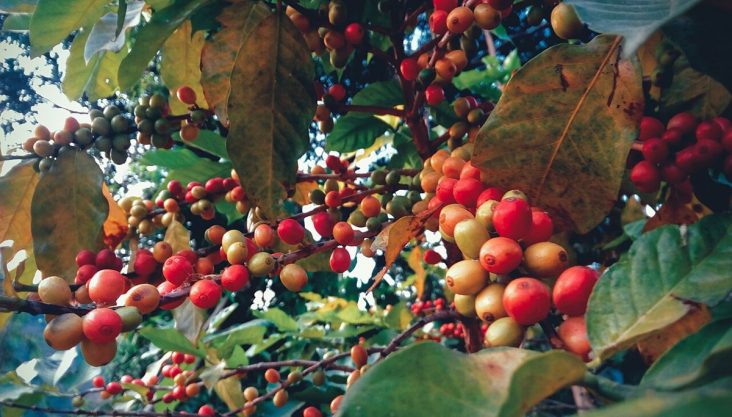
Coffee cherries photographed on a plant in rural Nepal. Contextual photograph; not identified as produce from the businesses profiled here.
The design on top of a cappuccino lasts a few minutes. The decisions behind its coffee take much longer: growing a crop, processing the cherries, roasting the beans and finding a customer who notices the difference. Nepal’s coffee story becomes more interesting when we trace that journey backwards from the cup.
A crop with a comparatively young local history
The National Tea and Coffee Development Board’s history places an early beginning in Aapchaur, Gulmi, where Hira Giri is believed to have planted seeds brought from Burma around 1938. The board describes a long period before coffee developed into a commercial crop.
Its account then traces seed distribution, the establishment of the Nepal Coffee Company in Manigram and the organisation of growers. These steps make coffee’s history a story of institutions and markets as well as plants. Growing something is one challenge; creating a repeatable route from farm to buyer is another.
The board’s historical page is useful for that sequence. Its older production and district figures should not be mistaken for a fresh 2026 census of the industry.
The people giving the beans a name
Nepali Times’ February 2026 feature follows a newer coffee culture through growers, trainers, roasters and café businesses. It describes Santosh Shah of Bariko Coffee documenting the process from picking cherries to brewing, and Nima Tenzing Sherpa returning from the United States to establish Lekali Coffee Estate in 2018.
Those examples put identifiable work behind the idea of Nepali specialty coffee. The same report describes a Kathmandu Coffee Map created through a collaboration involving Samparka Cloud Loyalty and Baato Maps, showing how the culture around cafés is also becoming a subject of local creativity.
The interesting connection is between the farm and the conversation at the counter. When a café can explain where its beans were grown and how they were handled, a drink becomes a way to learn about a producer instead of simply choosing a size.
Make the next cup a more curious one
Ask which Nepali origin is being served, who roasted it and what the café knows about the lot. Treat the answers as a conversation, not a test. A menu that says “local” is a beginning; a producer’s name makes it more useful.
Avoid assuming that every Nepali coffee tastes the same or that a geographical label guarantees a particular standard. The point of following the beans is to notice differences and the work behind them.
There is plenty of room for pleasure here: a good cup, a story you had not heard, a hillside that suddenly has a connection to your table. That is a satisfying way to discover Nepal without leaving your chair.
From the OMG Nepal archive: 10 Local Foods to Try when in Kathmandu.
Sources and further reading
Sources checked October 6, 2026. Event details may change; historical dates are stated in the story.
- National Tea and Coffee Development Board: coffee history
- Nepali Times: Caffeine buzz, February 2026
Cover photo: Coffee beans in rural areas of Nepal.jpg by Elina Parajuli / Wikimedia Commons. CC BY-SA 4.0. Resized for web; thumbnail display may crop.