

 OMG Nepal
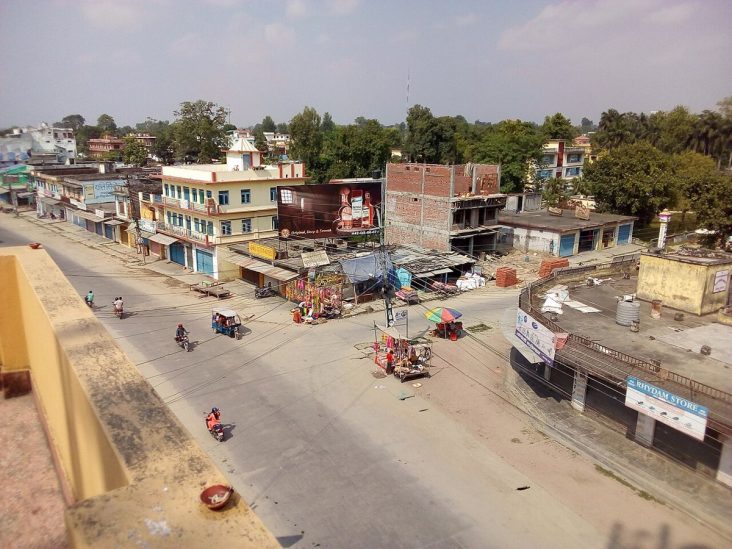
Park Chowk, Dhangadhi. Archival city photograph, not the waste-processing facility.
The first decision in a recycling system can happen before a collection vehicle arrives. A household separates its waste, and materials that might have disappeared into one mixed heap begin different journeys. Dhangadhi’s recent experience puts that small decision inside a much larger city story.
Follow the material—and the work
A January 2026 UNDP report describes Dhangadhi’s waste-processing model as a partnership: the municipality provides land and infrastructure, while Nanda Devi Sewa Kendra manages daily operations. Household service fees and sales of recovered materials help support the system.
At the processing centre, materials are sorted into more precise categories, compacted and sold. Organic waste goes to a biogas plant. The report identifies 145 local jobs and says women make up more than half of the workforce. These are figures reported by the programme, rather than an independent audit by OMG Nepal.
Worker Chanda Shahi’s account in the report links employment close to home with greater financial independence. It is a useful reminder that the value of a waste system is also felt in the lives of the people doing the sorting.
A city is a chain of connected services
UNDP’s separate overview of its Dhangadhi partnership places waste within a wider agenda: nature-based infrastructure, local jobs and public services responsive to residents. It describes a growing city near the India–Nepal border facing pressures including unplanned expansion and flooding.
In April 2026, Japan and UNDP announced a US$1.296 million project for greener infrastructure and more resilient buildings in Dhangadhi. That announcement concerns an additional planned intervention; it should not be confused with proof that every part of the city has already changed.
Taken together, the projects point toward a practical idea. A city’s environmental performance depends on several systems working at once. Collection needs participation. Recovered materials need buyers. Infrastructure needs maintenance. Jobs need conditions that make people willing and able to keep doing them.
The interesting part is what lasts
A pile of recovered material makes a striking before-and-after photograph. The harder test arrives later: does the collection continue, does sorting remain useful, and can the system cover its everyday work?
That is why Dhangadhi deserves attention beyond a feel-good headline. Its reported model gives other communities specific arrangements to examine, including the relationship between public infrastructure, private operations and household participation.
For the rest of us, it changes what a rubbish bag represents. Somewhere inside that routine chore is a question about who works, what gets reused and how a Nepali city can make its everyday services function better.
From the OMG Nepal archive: Tech Innovation in Nepal.
Sources and further reading
Sources checked October 6, 2026. Event details may change; historical dates are stated in the story.
- UNDP: January 2026 waste-management account
- UNDP: Dhangadhi partnership overview
- Japan–UNDP urban-resilience announcement, April 2026
Cover photo: Parkchowk.jpg by Janak.sitaula.54 / Wikimedia Commons. CC BY-SA 4.0. Resized for web; thumbnail display may crop.