
 OMG Nepal
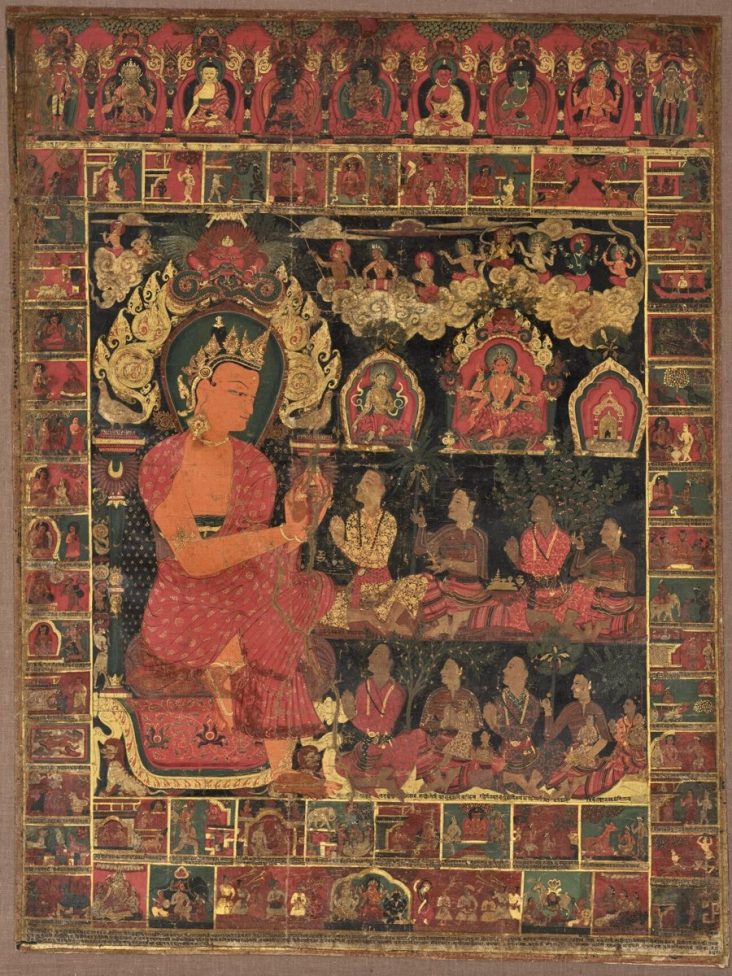
A densely painted image can make your eyes rush around it. There is a central figure, a border, smaller scenes and more detail than one glance can hold. Nepal’s paubha paintings invite the opposite response: slow down, choose a starting point and let the image reveal its structure.
Begin with the object, then the meaning
The Rubin Museum’s Project Himalayan Art discusses a Kathmandu Valley painting on cloth using the Newari term paubha. Its study of a Chakrasamvara mandala explains how an image can have a role in religious practice as well as extraordinary visual detail. That particular interpretation belongs to that particular work; it should not be applied automatically to every painting you encounter.
Paubha is not limited to a single subject. The Global Nepali Museum’s catalogue includes a cloth painting with scenes from the Shiva Purana, providing a Hindu example alongside the Buddhist mandala discussed by the Rubin. Context matters as much as colour.
Try a slower way of looking
Start at a comfortable distance and notice the overall arrangement. What draws the eye to the centre? How do the surrounding scenes relate to it? Then move closer, where permitted, and look for smaller figures or inscriptions. Keep the questions open until a label, guide or knowledgeable person can help answer them.
This approach avoids an easy mistake: treating every symbol as a decorative motif with a meaning you can guess. You can appreciate a composition before understanding all its details, and still be honest about what you have not yet learned.
Give the artist and tradition their names
For a contemporary work, ask who made it and how they describe their practice. For a historical work, read the date, provenance and interpretation carefully. A broad label such as Himalayan art should be the beginning of an enquiry, not the end.
If you share a picture, include the work’s actual title and credit where available, and follow the collection’s photography rules. Paubha rewards this extra care. The more precise the questions become, the more the painting offers beyond its immediate visual impact.
Read more on OMG Nepal
Mandala – Geometric pattern, color and many more
Sources
- Rubin Museum: Chakrasamvara mandala and Newar donors
- Global Nepali Museum: paubha with scenes from the Shiva Purana
Paubha with Bejeweled Buddha Preaching, Nepal, 1648. Reproduction of a historical artwork. Paubha painting of Bejeweled Buddha Preaching, 1648 CE, Nepal.jpg by Unknown author / Wikimedia Commons. CC0. Resized for web; thumbnails may crop.