
 OMG Nepal
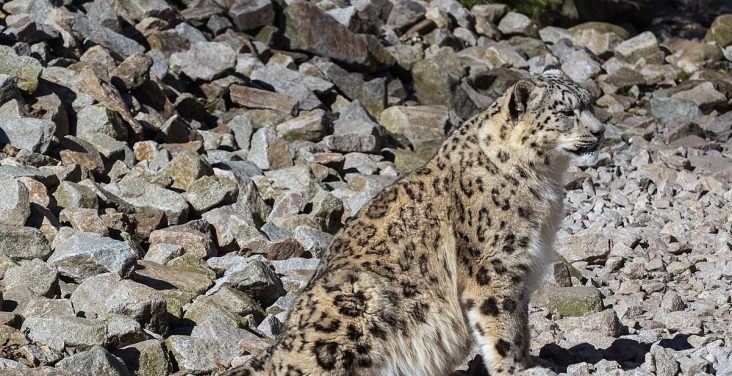
Snow leopard at Karlsruhe Zoo, Germany. Species photograph; not a wild Nepal snow leopard or a survey camera-trap image.
A snow leopard can be present in a landscape without showing itself to the person looking for it. That makes the question of how many live in Nepal much harder than it sounds. Researchers have to build a picture from evidence collected across difficult terrain, then explain what that evidence can—and cannot—tell us.
The number behind the headline
Nepal’s 2025 national assessment estimated 397 snow leopards. WWF’s April 23 account describes it as the country’s first robust national estimate, assembled from seven study regions under the leadership of the Department of National Parks and Wildlife Conservation.
The assessment used distribution and density information collected between 2015 and 2024, including camera traps and genetic analysis of scat. Earlier estimates had relied more heavily on signs such as tracks and on habitat modelling.
The distinction is central to the story. An estimate is not a roll call of animals standing in front of one camera on one day. It brings different observations into a method designed to say something about a much larger, difficult-to-observe population.
Read the habitat as carefully as the photograph
WWF’s later reflection on the assessment places connected habitat among the essential conditions for the species’ future. It describes expanding infrastructure and a changing climate as pressures on the high-mountain landscapes used by snow leopards.
The government’s Snow Leopard Conservation Action Plan for 2024–2030 includes approaches such as non-invasive genetic analysis and camera-trap research. Its attention to conflict between people and wildlife also reminds readers that conserving a predator involves the livelihoods of those sharing its range.
Those strands belong together. Better population knowledge helps guide action, but a number alone cannot maintain a movement route or resolve the loss a livestock owner experiences. Conservation has to connect what scientists learn with what people need to live alongside wildlife.
A better reason to celebrate
There is real satisfaction in seeing Nepal’s research capacity produce a stronger answer to an old question. The achievement is also methodological: sustained fieldwork, collaboration and the willingness to replace a rough assumption with better evidence.
That is a richer story than treating 397 as a permanent score. Future surveys may improve the estimate or reveal changes. The point is to keep learning well enough to respond.
The snow leopard’s appeal will always include its elusiveness. Nepal’s researchers show that an animal can remain difficult to see while becoming less mysterious to science.
From the OMG Nepal archive: Best Wildlife Photographer Of Nepal You Should Know about.
Sources and further reading
Sources checked October 6, 2026. Event details may change; historical dates are stated in the story.
- WWF: April 2025 national-estimate announcement
- WWF: habitat context, December 2025
- Government of Nepal: Snow Leopard Conservation Action Plan 2024–2030
Cover photo: Panthera uncia – Zoo Karlsruhe.jpg by H. Zell / Wikimedia Commons. CC BY-SA 3.0. Cropped lower edge and resized for web to keep the main subject visible in thumbnails.