
 OMG Nepal
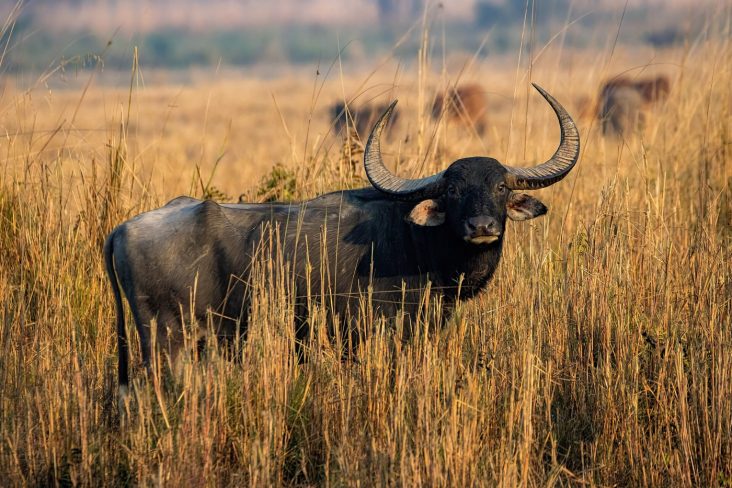
Wild water buffalo at Koshi Tappu in June 2025. File photograph.
It is easy to overlook a wild animal when it resembles something familiar. Nepal’s arna, the wild water buffalo, deserves a closer look. The National Trust for Nature Conservation identifies it as Bubalus arnee and describes an animal strongly connected to low-lying grasslands, water and the wider life of a floodplain.
Familiar outline, different context
NTNC’s species account distinguishes wild water buffalo from domestic buffalo and describes grazing, shelter and wallowing as parts of its daily behaviour. The important point for a visitor is not a dramatic size comparison; it is recognising a wild animal in a functioning habitat.
Nepal Tourism Board lists wild buffalo among the wildlife of Koshi Tappu, a reserve characterised by grassland, scrub and riverine forest. The landscape is part of the subject, not merely the background to the animal.
Conservation has to look beyond a head count
NTNC describes challenges including habitat damage from flooding and interactions with domestic animals. Its account also discusses the history of moving animals to establish an additional population elsewhere.
The figures on that undated species page should not be treated as a fresh 2026 census. Understanding conservation progress requires dated monitoring, not simply the most convenient number available online.
A more useful set of questions concerns habitat, health and the ability of the population to persist over time. The answers may be less compact than a headline, but they tell us more about what protection involves.
Look at the whole wetland
If you visit a wildlife area, keep a respectful distance and follow current reserve guidance. A large grazing animal is not an invitation to approach, and a photograph is not worth disturbing its movement.
Try widening the frame in your observation as well as your camera: the grass, water and cover all help explain why the animal is there.
The arna offers a welcome change from a wildlife conversation focused only on the most famous predators. Nepal’s conservation story also lives in floodplain grasslands and in animals whose importance becomes clearer when we stop assuming that familiar means ordinary.
From the OMG Nepal archive: Nepal's Greater One Horned Rhinoceros.
Sources and further reading
Sources checked October 26, 2026. Historical dates are stated in the story; announced event details may change.
- National Trust for Nature Conservation — wild water buffalo
- Nepal Tourism Board — Koshi Tappu wildlife reserve
Cover photo: Wild water buffalo (Bubalus arnee) at Koshitappu.jpg by Nirmal Dulal / Wikimedia Commons. CC BY-SA 4.0. Resized and converted to JPEG for web; theme thumbnails may crop.