

 OMG Nepal
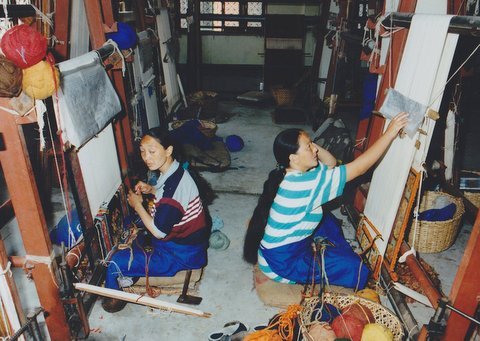
Weavers in Nepal. Archival craft photograph; not identified as Buddhimaya Ghale or workers at her enterprise.
A finished carpet can make the work behind it look seamless. In reality, raw material has to arrive, yarn has to be prepared, equipment has to be available and someone has to find a buyer. Buddhimaya Ghale’s story in Padampur, Chitwan, is about learning to hold those separate threads together.
Learning the skill—and building around it
A 2026 UNDP feature traces Ghale’s enterprise to wool-spinning training and the support that followed. After beginning as a paid spinner, she later took a leadership role, expanded the work and took responsibility for the business when the group arrangement struggled.
The report describes a chain she helped organise: obtaining raw wool, arranging dyeing in Kathmandu and distributing material to local women who made products. Equipment and marketing were part of the arrangement, alongside the spinning and weaving itself.
That is the revealing part of the profile. The craft skill mattered, but so did the work of connecting people who could make something with the inputs and customers needed to keep making it. UNDP’s account is the source for this individual history; it is not an interview conducted by OMG Nepal.
A training course is one part of an enterprise
The archived description of Nepal’s Micro-Enterprise Development Programme explains a broader approach built around skill and business training, support services and access to markets, finance and technology. The programme began in 1998 and its listed phases ended in 2018; it is a historical source, not a current invitation to apply.
That framework helps explain the practical demands visible in Ghale’s story without claiming the archived programme alone created her business. A person can learn a technique and still face difficulties obtaining materials or selling the result. Enterprise support becomes more useful when it considers the whole route.
It also gives the reader a better set of questions when hearing about a new livelihood project. What happens after training? Who purchases the product? Is the equipment usable and maintained? How is the work organised when circumstances change?
See the organiser as well as the object
Craft stories often stop at the beauty of a handmade item. Ghale’s experience invites attention to the decisions that make continuing production possible. That work deserves recognition alongside the finished weave.
For people interested in buying Nepali products, asking about the maker and the production process can reveal a much richer story than a generic souvenir label. It is a way to recognise both skill and the effort required to sustain it.
In Padampur’s wool story, the thread connects a craft to an enterprise. The person keeping that connection working is part of the product’s value.
From the OMG Nepal archive: Discover Nepal’s Textile Artistry: Tradition, Innovation and Sustainability.
Sources and further reading
Sources checked October 6, 2026. Event details may change; historical dates are stated in the story.
Cover photo: Two female weavers in Nepal.jpg by Peter van der Sluijs / Wikimedia Commons. CC BY-SA 3.0. Resized for web; thumbnail display may crop.