

 OMG Nepal
School bills are rarely the most exciting objects in a classroom. A group of Kathmandu University students found a reason to look at them differently. Their idea: turn everyday records into a tool that helps schools understand their carbon footprint, and helps students connect a large environmental question with familiar activities.
A local problem, a practical design
UNESCO’s July 8, 2026 account names Team Harit as the winner of a youth hackathon held in June. The team comprised Shova Gelal, Bisesh Marasaini, Bhawana Ojha and Jayed Alam Mansur. Its calculator used information such as bills, fuel records and waste estimates rather than expecting schools to begin with unfamiliar specialist datasets.
The programme’s intended tool includes Nepali and English interfaces and offline functionality. UNESCO described further refinement and school piloting as next steps in its July report. A prototype win should not be mistaken for evidence of nationwide adoption or proven emissions reductions.
Why those design choices are interesting
Imagine a classroom exercise that starts with a real question: what information would we need to understand our school’s energy use? Students could identify the records, discuss what is missing and consider how to compare different periods fairly. That is an example of how such a tool might support learning, not a report of a lesson already delivered by this team.
The appeal lies in making a complex subject approachable. A calculator is most useful when its users can understand the inputs, question the results and explain the limits of an estimate. A colourful total on a screen is only the beginning of that conversation.
Innovation worth following
UNESCO’s broader education programme also describes teacher training, school gardens, eco-clubs and peer learning among pilot schools. The calculator sits within that wider effort; it is not a substitute for it.
For readers looking for an encouraging Nepal story, this one offers something more concrete than a vague claim about youthful potential. It begins with named students and an identifiable design problem. The next chapter to watch is what schools learn from using and testing the idea. Sometimes an inventive story starts with the paperwork everyone else walks past.
Read more on OMG Nepal
Sources
- UNESCO: youth-designed calculator, July 8, 2026
- UNESCO: green education programme, updated August 24, 2026
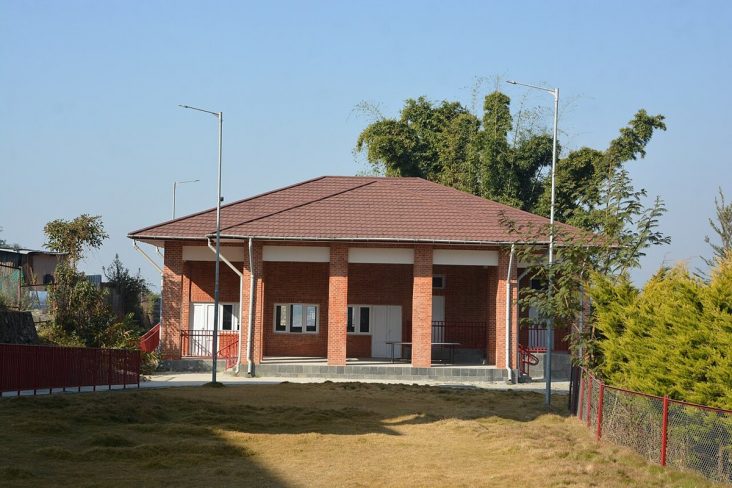
Conference building at Shree Bhagawati Secondary School, Sankhu. Contextual photograph; the school is not identified here as a participant in the calculator project. 202412 Conference building of Shree Bhagawati Secondary School, Sankhu 05.jpg by Jonashtand / Wikimedia Commons. CC BY-SA 4.0. Resized for web; thumbnails may crop.